

APAC capacity and geopolitics
Data centres are treated as strategic infrastructure shaped by regional integration, regulation, financing and location.
A decision-focused guide to Data Centre World Asia 2026 covering AI-ready facilities, hyperscale growth, power strategy, cooling, connectivity, resilience, construction, security and the evolving APAC data-centre market.
The 2026 programme connects hyperscale growth, AI-ready facilities, GPU infrastructure, energy resilience, cooling and regional capacity decisions across Singapore and Asia-Pacific.

Data centres are treated as strategic infrastructure shaped by regional integration, regulation, financing and location.
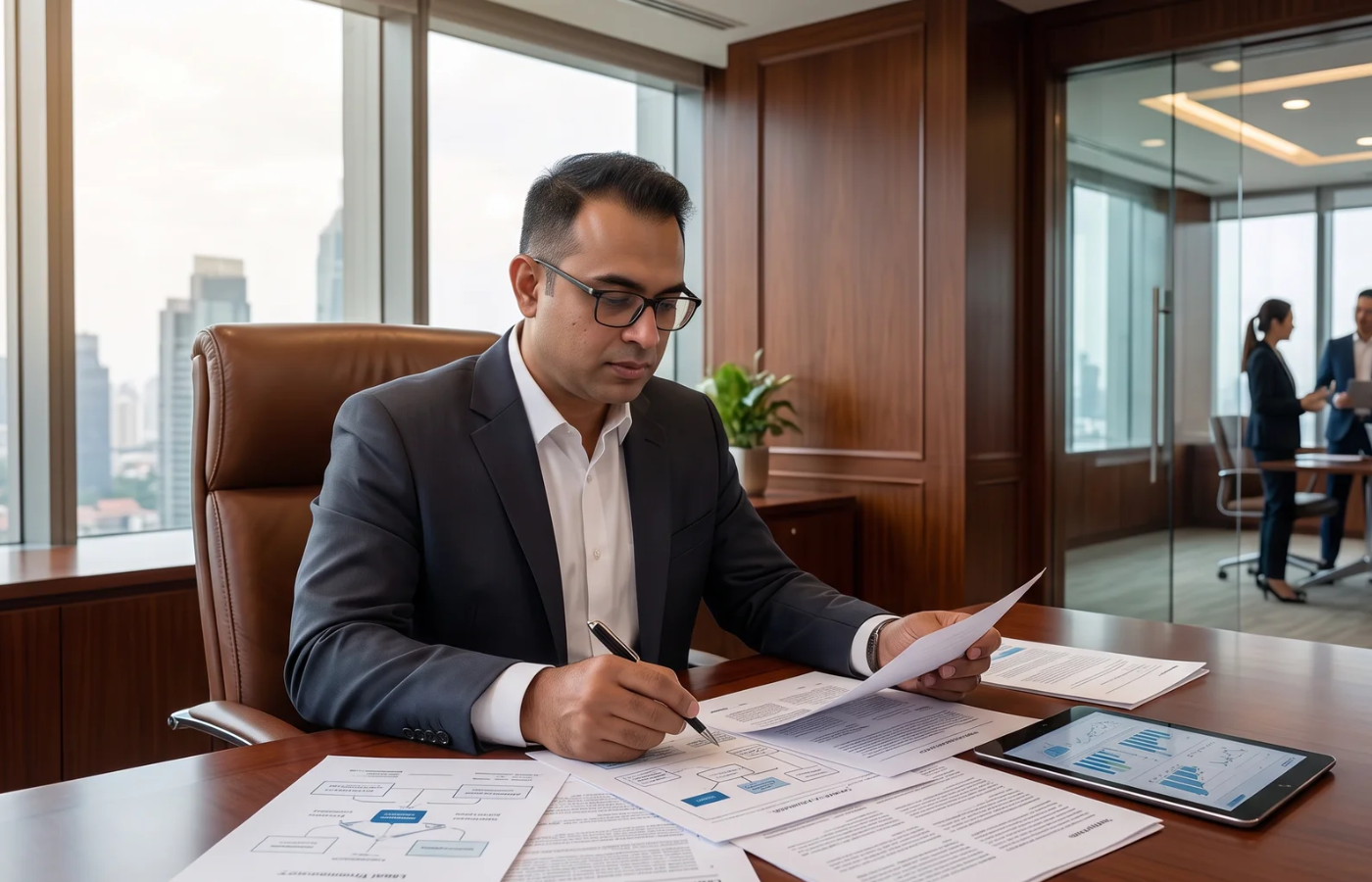
AI-ready facilities depend on power strategy, thermal design, resilience and operational controls.

The programme asks how regional operators compete as hyperscale demand and AI density reshape the market.
Translate themes into requirements, risks, vendor questions and market opportunities before choosing a technology or expansion path.
Identify infrastructure bottlenecks that can become products, services or defensible market-entry wedges.
Separate infrastructure demand narratives from executable capacity, power access and operator economics.
Compare locations and providers using workload, resilience, sovereignty, power and total-cost requirements.
Data Centre World Asia 2026 frames data centres as the physical backbone of the digital economy and as a strategic infrastructure issue for Asia-Pacific. That matters because the data-centre decision is no longer only a facilities choice. It increasingly links compute availability, network architecture, energy supply, cooling, resilience, construction, financing, regulation and national digital strategy.
For founders, the consequence is that infrastructure-dependent business models need to understand where capacity can actually be deployed. For investors, technical demand must be separated from executable projects. For enterprise buyers, colocation or cloud selection should be tested against power, resilience, data-residency, connectivity and service-level requirements rather than headline capacity alone.
The official conference-theatre framework highlights AI scalability, next-generation infrastructure and energy resilience as core issues. The event's call for speakers goes further, listing AI-ready modular data centres, AI-ready governance, GPU infrastructure, power strategy and Singapore's roadmap as an AI-ready nation. Together, these topics show why data-centre planning is increasingly inseparable from AI deployment.
A useful decision model is to distinguish four layers: compute demand, facility readiness, utility readiness and operational readiness. A site may have land and a building plan but still fail as an AI location if grid access, cooling design, fibre paths or operational capability cannot support high-density workloads.
The programme explicitly raises the hyperscale revolution and asks how regional operators can remain relevant. This creates a two-sided market. Global hyperscalers need local capacity, regulatory alignment and infrastructure partners, while regional operators need differentiation in speed, customer intimacy, sovereign capability, location, energy access or specialised high-density services.
For startup and investment analysis, the strongest opportunities may therefore sit in enabling layers rather than only in owning large facilities. Examples include cooling, power electronics, monitoring, predictive maintenance, modular design, networking, workload orchestration, energy optimisation and security.
The 2026 topic list explicitly includes an "AI Power Shock," APAC power strategy, energy transition and even nuclear energy as a possible response to rising demand. This does not mean any one energy pathway is inevitable. It does mean data-centre economics cannot be assessed without power availability, price, redundancy, carbon constraints and grid-connection timing.
Buyers should ask what power is contracted, when it becomes available, whether the design supports high-density racks, how backup systems operate and what energy-efficiency metrics are used. Operators should also distinguish between nominal megawatts announced and deliverable capacity that can support real customer workloads.
High-density AI workloads can push thermal design beyond conventional air-cooling assumptions. The exhibitor directory includes liquid-cooling specialists and the programme lists water reuse as a responsibility issue in data-centre cooling. This makes cooling architecture part of site selection, sustainability and operating-risk analysis.
Liquid cooling can improve thermal handling for dense accelerator deployments, but it changes equipment, plumbing, maintenance and operational practices. Buyers should evaluate cooling technology against workload density, facility design, water use, heat-rejection systems, maintenance capability and total lifecycle cost rather than treating it as a single product decision.
The programme includes critical-infrastructure design, construction risk and cyber risk in infrastructure systems. Data-centre resilience therefore includes more than redundant power feeds. It includes fire and safety systems, physical access, controls, supply chains, software, facility-management systems, incident response and organisational processes.
For enterprise procurement, a practical diligence set should cover topology, redundancy model, maintenance windows, failure-domain design, disaster recovery, cyber controls, physical security, compliance evidence and dependency on utilities or third-party suppliers.
Data Centre World Asia treats geopolitics, economy and APAC integration as explicit topics. Singapore's importance comes from its role as a regional connectivity and enterprise hub, but capacity strategies increasingly interact with neighbouring markets. A company serving Southeast Asia may need a portfolio approach across Singapore and other regional locations rather than assuming every workload should sit in one city.
That creates a market-intelligence need around latency, data rules, customer location, energy availability, fibre routes, disaster-risk diversification and commercial terms across multiple jurisdictions.
| Decision layer | Core question | Evidence to collect |
|---|---|---|
| Power | Can the site support current and future density? | Grid access, contracted capacity, redundancy, backup, price |
| Cooling | Can thermal systems handle AI workloads? | Rack density, liquid-cooling readiness, water use, heat rejection |
| Connectivity | Can workloads reach users, clouds and data efficiently? | Carrier diversity, fibre routes, latency, peering |
| Resilience | What happens when systems fail? | Failure domains, DR, maintenance, physical and cyber controls |
| Economics | Is capacity financeable and usable? | Capex, opex, occupancy, customer mix, power cost |
| Location | Why should the workload sit here? | Regulation, customer proximity, risk, workforce, utilities |
This page is the canonical owner for Data Centre World Asia 2026, data centres Singapore 2026, Singapore data centre conference, APAC data centre market, hyperscale data centres Asia, colocation Singapore, data centre infrastructure, data centre cooling, liquid cooling, power infrastructure, data centre energy, critical infrastructure, data centre resilience, data centre construction, data centre security, AI-ready data centres, GPU infrastructure and Singapore data centre strategy. The narrower AI-compute and high-density workload intent is handled on the dedicated AI Data Centres page.
Continue with Data Centre Energy for grid, power, cooling and resilience, and Open Compute Project for OCP Southeast Asia Tech Day, open hardware and AI-data-centre architecture.
The event programme and exhibitor categories show which infrastructure problems are receiving attention at Tech Week Singapore 2026. They do not establish market size, project viability, vendor quality, future electricity availability or investment returns. Any real project requires site-specific technical, commercial, environmental, regulatory and financial diligence.
Map power, cooling, connectivity, resilience, capacity economics and APAC location risk before committing workloads or capital.
TechStartupHQ connects data-centre evidence with AI infrastructure, cloud, cybersecurity, energy, startup markets and APAC expansion strategy.
Return to the Event HubBrowse related guides by topic. These links connect the overview, detailed research and next practical decisions.