
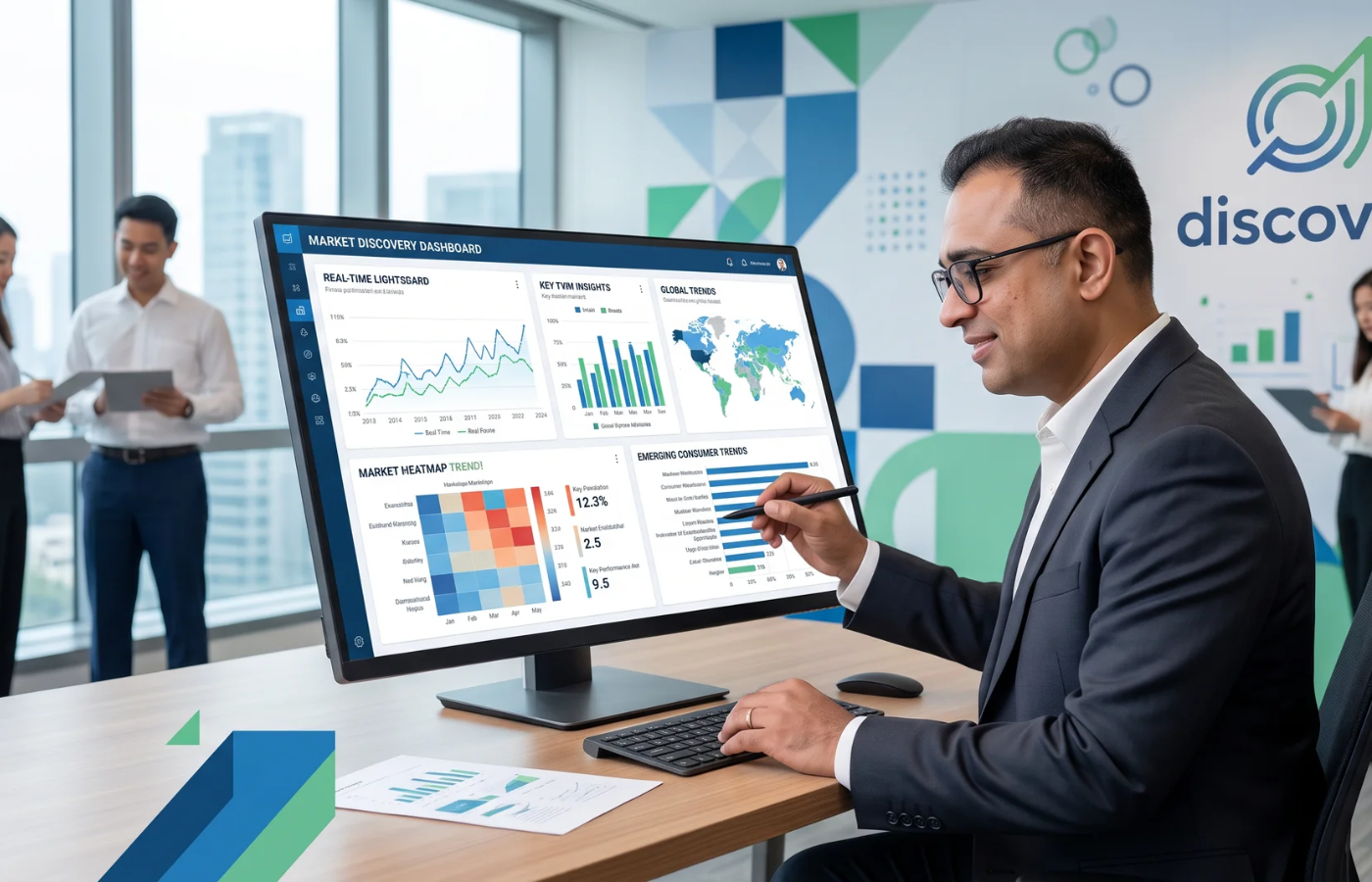
 Mainstage
AI at scale, physical AI and the Agentic Era
The flagship programme moves from enterprise-scale AI and autonomous systems into general-purpose robotics, world models, infrastructure, governance and production-grade operations.
A research guide to artificial intelligence at Tech Week Singapore 2026: enterprise AI, AI agents, production-grade systems, AI-ready data, responsible AI, LLMOps, AI infrastructure, physical AI and the commercial implications for startups, investors and enterprise technology teams across Asia-Pacific.
Across Tech Week Singapore 2026, AI appears not as one isolated track but as a cross-event operating layer connecting data foundations, agents, software delivery, cybersecurity, cloud architecture, compute, robotics and organisational change.

Production deployment, measurable ROI, workflow integration and operating accountability.
Autonomous workflows, permissions, orchestration, monitoring, human oversight and enterprise integration.
Data quality, governance, semantic layers, RAG, observability and pipelines built for reliable AI use.
Governance frameworks, privacy, transparency, compliance, lifecycle controls and safe model operations.
Cloud, specialised compute, cost optimisation, networking, data centres and scalable production environments.
Robotics, simulation, world models, sensing and AI systems that operate in the physical environment.
Compare customer urgency, technical differentiation, infrastructure dependency, regulatory exposure and route-to-market before choosing where to compete.
MainstageThe flagship programme moves from enterprise-scale AI and autonomous systems into general-purpose robotics, world models, infrastructure, governance and production-grade operations.
 Big Data & AI World
The Data Strategy Theatre focuses on AI-ready data, responsible AI, scalable AI engineering and LLMOps, including governance, observability and lifecycle controls.
 Cloud & AI Infrastructure
The programme addresses AI deployment at scale, agentic productivity, resilient architecture, AIOps, platform engineering and DevSecOps.
Use the wider TechStartupHQ strategy framework to connect an AI technology signal to market choice, customers, partnerships and growth execution.
New Wave 2 research: Responsible AI & Governance and Data Strategy examine the control and data foundations required for production-grade AI.
Direct answer: the 2026 programme indicates that enterprise AI competition is shifting toward systems that can operate reliably in production. The event does not present AI merely as a model or application category. It connects AI to data quality, governance, security, software delivery, cloud architecture, compute infrastructure and human operating models. For startups, that broadens the opportunity map beyond foundation models. For enterprise buyers, it raises the threshold for adoption because an AI system has to work inside existing data, security, compliance and workflow constraints.
The official Mainstage describes a move beyond digital experimentation into the “Agentic Era.” Day One includes AI at scale, general-purpose robotics, world models, quantum intelligence and AI infrastructure. Day Two shifts toward enterprise readiness, governance, cyber resilience and production-grade operations. This sequencing is useful because it separates capability expansion from operational adoption: the technology may become more autonomous, but commercial value depends on whether the surrounding organisation can deploy, supervise and integrate it.
“AI at scale” is a recurring 2026 idea. That phrase matters because scaling is different from demonstrating a model. A production system must connect to enterprise data, software, identity, security, logging, policy and business processes. It must also create an outcome that a buyer can measure. This creates potential demand for integration platforms, workflow systems, evaluation tools, observability, security controls and domain-specific applications that sit between models and business operations.
For founders, the central question is therefore not only whether a model can perform a task. It is whether the product can survive the operational environment around the task. That means clarifying who authorises actions, what happens when the system is uncertain, how users intervene, where data is stored, how outputs are audited and what business metric improves after deployment.
Big Data & AI World explicitly frames AI agents as a new consumer of enterprise data, while Cloud & AI Infrastructure examines agentic systems that collaborate with employees and redesign workflows. An agent that can read data, call tools and execute actions creates a different architecture from a simple chatbot. It requires access controls, context management, monitoring, tool permissions, error handling and boundaries around autonomous action. Explore the dedicated Agentic AI research page.
This supports distinct startup opportunities in agent orchestration, permissioning, identity, evaluation, agent security, workflow integration and domain-specific autonomous systems. It also makes data infrastructure more important. If agents receive stale, incomplete or poorly governed information, greater autonomy can amplify the consequences of bad data rather than eliminate them.
The Data Strategy Theatre is built around AI-ready data, responsible AI, scalable AI engineering and LLMOps. Its published programme includes data quality, ethics and governance, AI-ready pipelines and the idea that agents are becoming new data consumers. The accompanying 2026 speaker topics go deeper into privacy-preserving architectures, knowledge graphs, retrieval-augmented generation, semantic layers, observability and synthetic data.
These topics imply that data products for the AI era can be evaluated by more than storage or analytics functionality. Buyers may need provenance, access controls, quality monitoring, semantic consistency and the ability to understand which information influenced an AI output. This can create opportunity for data infrastructure companies that make enterprise information more usable and auditable for AI systems.
The event's responsible-AI framing is practical rather than purely ethical. The published topic set includes governance frameworks, fragmented regulation, security and compliance in LLMOps, model versioning, rollbacks, human feedback loops and measurement beyond model accuracy. These are operational controls that affect whether an enterprise can run an AI system repeatedly and safely.
For founders, responsible AI can therefore become part of product architecture instead of a policy document added at the end. Audit logs, approval workflows, model inventories, evaluation records, version control, fallback behaviour and data-governance controls can all become commercially relevant features when buyers need evidence that an AI deployment remains controlled over time.
Big Data & AI World calls for production-grade AI systems and LLMOps, while Cloud & AI Infrastructure focuses on resilient architectures and deployment economics. Together, these tracks point to a layer of opportunity between raw compute and end-user applications: model deployment, routing, evaluation, monitoring, caching, inference optimisation, observability and lifecycle management.
The opportunity is not automatically attractive in every subcategory. Infrastructure markets can be technically demanding, capital intensive and exposed to rapid platform changes. The strongest products are likely to solve a persistent operational constraint rather than reproduce a feature that a cloud or model provider can absorb easily.
The Mainstage gives prominent space to general-purpose robotics and the move from foundation models toward world models. That broadens the AI opportunity set into systems that sense, predict and act in physical environments. Relevant categories include robotics, industrial automation, simulation, computer vision, sensors, edge computing, specialised hardware and safety systems.
Singapore and the wider Asia-Pacific market provide useful contexts for this theme because many regional industries depend on logistics, manufacturing, ports, healthcare, aviation and dense urban infrastructure. The event programme is evidence of attention to these technologies, not proof of adoption rates. Any investment or market-entry decision still needs sector-specific evidence about customers, regulation, deployment cost and procurement cycles.
Cloud & AI Infrastructure Asia focuses on scalable, secure and cost-efficient AI environments. Its published themes include enterprise AI at scale, agentic systems, resilient architecture, AIOps and DevSecOps. This moves the AI discussion below applications into compute, cloud operations, networking, data location, cost and reliability.
For AI startups, infrastructure choices can shape unit economics and market reach. High inference costs can weaken margins. Data-location requirements can affect which cloud architecture is acceptable. Latency can change whether a product works for real-time use. Security requirements can determine which enterprise customers are addressable. These constraints make infrastructure strategy part of product strategy rather than a back-office technical decision.
Tech Week Singapore's DevOps Live material extends AI into the software-development lifecycle through agentic coding, AIOps, platform engineering and DevSecOps. This suggests two related markets: tools that use AI to produce software and tools that help organisations control the software produced or operated by AI.
That distinction matters. Generating code faster does not remove requirements for testing, security, observability, deployment controls or accountability. As development becomes more automated, platform and governance layers may become more important because organisations still need to understand what changed, why it changed and whether it is safe to release.
| AI layer | Question to test | Evidence to seek |
|---|---|---|
| Enterprise applications | Does the product improve a measurable workflow? | Deployment evidence, adoption, time/cost impact, integration depth |
| Agents | Can autonomy be controlled safely? | Permissions, evaluation, failure handling, human escalation, auditability |
| Data | Is enterprise information reliable enough for AI use? | Quality, provenance, governance, semantic consistency, observability |
| Responsible AI | Can the deployment remain governed over time? | Model inventory, monitoring, approvals, logs, lifecycle controls |
| AI infrastructure | Can the economics and architecture scale? | Compute cost, latency, reliability, data location, security |
| Physical AI | Does the system work safely in the real environment? | Field performance, hardware integration, safety, deployment cost |
This page is the canonical owner for broad AI-at-event intent: AI at Tech Week Singapore 2026, Singapore AI conference 2026, artificial intelligence Singapore 2026, enterprise AI Singapore, generative AI Singapore, AI agents Singapore, AI infrastructure Asia, responsible AI Singapore, AI-ready data, AI engineering, LLMOps, machine learning Singapore, physical AI Singapore, robotics AI, AI governance, AI deployment, production-grade AI and AI trends Asia. Narrower intents such as agentic AI, robotics/world models, responsible AI governance and cloud/AI infrastructure remain separate children because their user decisions and evidence requirements materially differ.
Conference programmes show which issues organisers, speakers, sponsors and attendees are prioritising; they do not establish market size, startup success, investment returns or enterprise adoption by themselves. The analysis above therefore treats programme themes as signals for further research. Company-level opportunity should be validated using customer evidence, technical feasibility, competitive structure, regulation and economics.
Production AI also depends on infrastructure and engineering systems. See Cloud & AI Infrastructure for compute, sovereignty and cloud operations, and DevOps & Platform Engineering for AI-assisted software delivery, DevSecOps and AIOps.
Assess the customer problem, product layer, technical dependencies, buyer, evidence and APAC go-to-market path before allocating product or sales resources.
Security connection: continue with AI Cybersecurity at Tech Week Singapore 2026 for model, data, agent and security-operations implications.
TechStartupHQ connects event evidence with startup ecosystems, investors, technology categories and commercial pathways across Singapore and Asia-Pacific.
Return to the Event HubBrowse related guides by topic. These links connect the overview, detailed research and next practical decisions.