A practical guide to the 29-30 September 2026 programme at Marina Bay Sands, covering the Mainstage plus Cloud & AI Infrastructure, DevOps Live, Cyber Security World, Big Data & AI World and Data Centre World. Use it to identify the sessions, themes and technology signals most relevant to enterprise AI, startup opportunity and APAC growth.
Day 1 leans toward agentic AI, physical AI, quantum technology and infrastructure. Day 2 shifts toward enterprise readiness, governance, cyber resilience, operational scaling and human-AI collaboration.

Mainstage themes include AI at scale, robotics and physical AI, world models, quantum computing, AI infrastructure and the agentic enterprise.
Mainstage emphasis moves to enterprise readiness, governance, cyber defence, digital complexity, banking transformation and AI operations.
Enterprise AI deployment, sovereignty, specialised compute, cloud control, agentic workflows, AIOps and DevSecOps.
National strategy, regulation, data protection, cloud and hybrid security, critical systems, supply chains and AI-driven threats.
AI-ready data, governance, data quality, responsible AI, scalable AI engineering and LLMOps.
AI-ready infrastructure, critical facilities, energy security, efficiency, cooling and next-generation compute capacity.
We can map agenda themes against your market, customer, investment or partnership priorities rather than simply selecting the most visible keynote sessions.
| Time | Day 1: 29 September | Why it matters |
|---|---|---|
| 09:00 | Opening remarks from Singapore's Ministry of Digital Development and Information | Sets the public-policy context for the event. |
| 09:35 | Enterprise AI at scale with QuantumBlack, AI by McKinsey | Signals the shift from pilot projects to operational deployment. |
| 10:05 | Physical-world AI and general-purpose robotics with Google DeepMind | Extends AI opportunity into robotics, logistics and industrial systems. |
| 10:35 | NVIDIA AI technology session | Connects foundation-model progress with world models and advanced compute. |
| 11:05 | Quantum computing session with Horizon Quantum | Raises questions around readiness, capability and future competitive advantage. |
| 11:35 | AI infrastructure session with FuriosaAI | Highlights chips, compute efficiency and production infrastructure. |
| 14:00 | Executive panel on the AI-first enterprise | Connects AI capability to growth, data, operating models and enterprise strategy. |
| 14:55 | Agentic enterprise discussion | Focuses on autonomous workflows, trust and enterprise data/AI leadership. |
| Time | Day 2: 30 September | Why it matters |
|---|---|---|
| 10:00 | Enterprise readiness with AI Singapore | Moves attention from experimentation to organisational capability and execution. |
| 10:30 | Global AI innovation across governance and business | Links public-policy structures with enterprise adoption. |
| 11:00 | AI and human longevity | Illustrates AI application beyond enterprise software into health and life sciences. |
| 11:30 | Threat-led cyber defence with INTERPOL's Global CISO | Connects cybersecurity posture directly with business resilience. |
| 14:00 | Future of banking and technology leadership | Relevant to fintech, regulated enterprise transformation and operational change. |
| 14:40 | Scaling AI in APAC supply-chain operations | Provides a concrete operations use case for regional enterprise AI. |
| 15:10 | Closing keynote from the US Air Force CIO | Uses high-reliability operational principles as a lens for business AI. |
Use the TechStartupHQ briefing to connect the event schedule with startup discovery, enterprise sales, partnerships, investment and international expansion.
Direct answer: the official programme is too broad to optimise by speaker visibility alone. A better approach is to map each theatre and session to a specific decision. Founders may prioritise buyer pain points, infrastructure shifts and partnership signals; investors may look for technologies moving from experimentation to deployment; enterprise teams may focus on operating models, risk and implementation; market-entry teams should watch where regional policy, sovereignty and infrastructure affect adoption.
The first-day Mainstage moves rapidly from enterprise AI deployment into robotics, world models, quantum technology and AI infrastructure. That sequence matters because it shows a widening definition of the AI market. The opportunity is no longer limited to generative-AI applications. It now reaches compute, specialised chips, autonomous systems, robotics, simulation, data infrastructure, model operations and the controls required to move systems into production.
For startup analysis, Day 1 is therefore useful for identifying second-order categories. A founder building software for GPU utilisation, robot orchestration, data quality, agent monitoring or AI security may be exposed to the same demand cycle as a model vendor while competing in a narrower category. Investors can use the agenda to identify enabling layers that might benefit as enterprise deployments become more complex.
The second-day programme shifts from frontier capability toward enterprise readiness, governance, cybersecurity, leadership and operational scaling. This is an important distinction. Technology adoption often slows not because a system cannot work, but because organisations cannot establish ownership, security, compliance, data quality, integration, cost control or measurable business value.
For B2B founders, Day 2 can be read as a catalogue of deployment friction. Products that reduce integration effort, improve auditability, secure machine identities, manage data rights, simplify cloud complexity or prove return on investment may address the practical obstacles between successful pilots and broad deployment.
The dedicated Cloud & AI Infrastructure programme covers enterprise AI deployment, sovereignty, specialised compute, next-generation cloud models, multi-cloud control and cost management. Its Enterprise Optimisation theatre adds AI companions, agentic workflows, enterprise software and the future of work. DevOps Live adds agentic coding, AIOps, platform engineering and DevSecOps.
Together, these tracks create a useful map of current infrastructure demand: compute has to be available, governed, cost-efficient and observable; software teams have to integrate AI into delivery systems; and enterprise users need new workflows that combine autonomous systems with human oversight. Companies selling into this stack should map their propositions against a specific operational constraint rather than generic AI transformation language.
The cyber programme addresses governance, regulation, data protection, cloud and hybrid environments, critical systems, supply chains and workforce development. This matters for AI startups because new capabilities introduce new identities, access patterns, data flows and attack surfaces. Security therefore becomes part of product architecture and procurement, not a later compliance layer.
The strongest startup opportunity may sit where cyber controls become unavoidable infrastructure: agent permissions, identity, audit logs, model and data provenance, secure software supply chains, threat detection, cloud posture and post-quantum transition planning.
The Data Strategy theatre explicitly focuses on AI-ready data, governance, responsible AI, scalable AI engineering and LLMOps. Its programme includes sessions on data preparation for AI, AI agents as new data consumers and production-ready data pipelines. The practical message is straightforward: model performance is only one component of enterprise AI. Organisations also need trustworthy data, defined ownership, transparent permissions and systems for monitoring quality over time.
For founders, this creates distinct commercial categories in data engineering, governance, cataloguing, privacy, evaluation and observability. For investors, it is a reminder that infrastructure businesses may gain value from AI adoption even when they do not market themselves as model companies.
The conference-theatre structure includes data-centre keynotes, critical infrastructure, a global stage and energy-security and efficiency programming. As AI workloads raise compute density, physical infrastructure becomes a strategic constraint. That shifts opportunity toward cooling, power systems, energy management, networking, storage, specialised hardware and software that improves utilisation or resilience.
This matters for Singapore because data-centre expansion decisions are intertwined with energy, land, connectivity and policy. The agenda should therefore be read not only as an IT conference schedule but also as an infrastructure-market map.
This page should own broad schedule and programme intent rather than splitting every wording variation into another URL. Relevant variants include Tech Week Singapore 2026 agenda, Singapore Tech Week agenda, Tech Week Singapore programme, conference schedule, Day 1 schedule, Day 2 schedule, Mainstage agenda, Cloud and AI Infrastructure programme, DevOps Live Singapore agenda, Cyber Security World Asia programme, Big Data and AI World agenda and Data Centre World Asia schedule.
| User need | Best section | Next child page |
|---|---|---|
| Plan the full event | Agenda at a glance + theatre map | Day 1 / Day 2 |
| Follow headline speakers | Mainstage highlights | Speakers |
| Find vendors and solutions | Specialist tracks | Exhibitors |
| Understand emerging technology | AI, quantum, cyber and data sections | Key themes / Mainstage |
| Assess long-term impact | Research interpretation | Future trends / Singapore ecosystem impact |
A practical event-research workflow is to record five things: the problem being solved, the buyer or operator describing it, the enabling technology, the implementation constraint and the measurable outcome. This structure turns conference notes into a dataset that can later support customer discovery, partnership targeting, investment research and market-entry decisions.
For example, a discussion about sovereign AI is more useful when separated into data location, compute ownership, policy control, procurement requirements and affected industries. A discussion about agentic AI becomes more actionable when mapped to workflow, permissions, integration, error handling and economics. The same discipline makes the agenda useful after the event-search spike has passed.
Continue planning: Exhibitors and companies · Venue, registration and tickets
Translate sessions into target accounts, buyer problems, partnership opportunities, technology categories and APAC market-entry hypotheses.
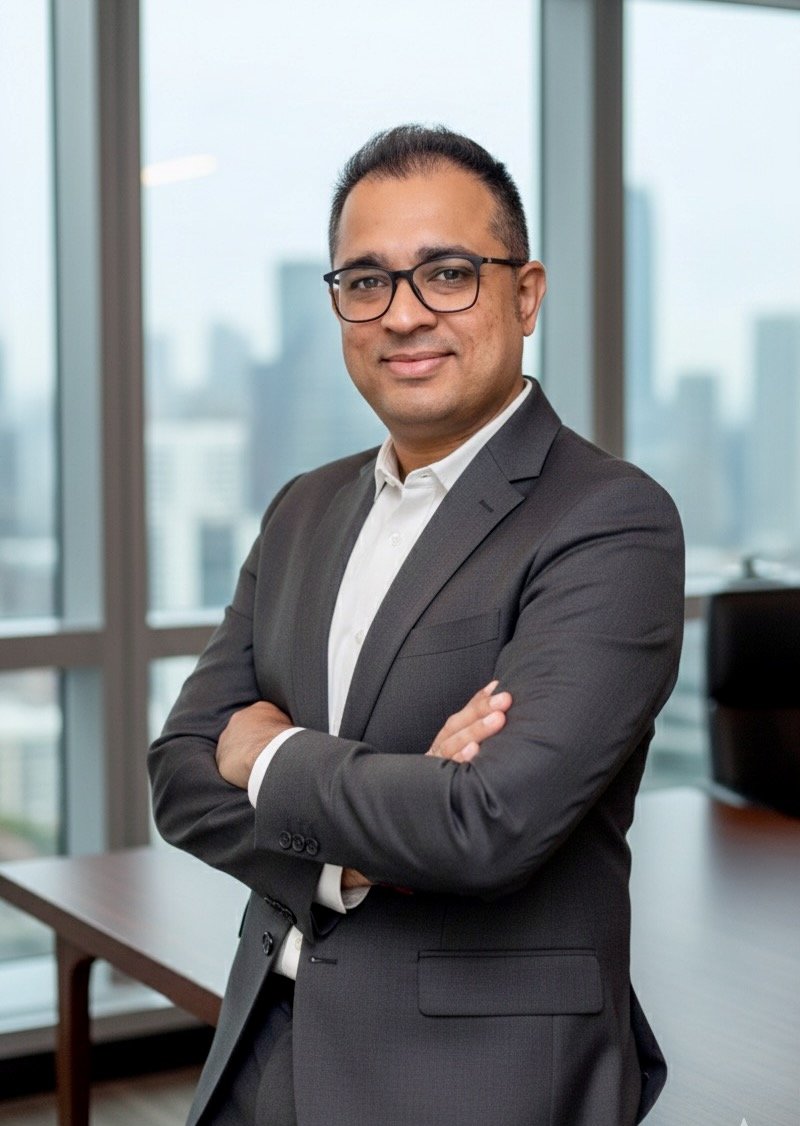
TechStartupHQ is owned by Dr. Rahul Dev under the global corporate structure of Hashchain Consulting Group USA. The platform connects startup, investor, technology and ecosystem research with practical pathways for customer acquisition, partnerships, fundraising and international expansion.
Explore the Event Hub