A research-led guide to Tuesday, 29 September 2026 at Marina Bay Sands, covering the Mainstage's agentic AI, robotics, world models, quantum and AI-infrastructure programme plus Day 1 signals from data strategy, cloud, DevOps, cybersecurity and data-centre tracks. Use it to identify the sessions and market shifts most relevant to startups, investors, enterprise buyers and APAC expansion.
The Day 1 Mainstage opens with Singapore's digital-policy context, then moves through enterprise AI at scale, general-purpose robotics, world models, quantum computing and AI infrastructure. Parallel theatres add the data, software, cyber and physical-infrastructure layers needed to make those systems operational.

AI systems move from generating outputs toward executing multi-step enterprise goals, raising questions about permissions, monitoring, workflow ownership and ROI.
General-purpose robots and world models extend the AI opportunity into logistics, manufacturing, mobility and other physical environments.
Quantum appears as both a compute opportunity and a readiness problem spanning infrastructure, skills, security and investment timing.
Compute architecture, accelerators, cloud capacity, data centres, networking and energy move closer to the centre of AI strategy.
Parallel data sessions emphasise quality, ethics, governance, pipelines and the new demands created when AI agents become active data consumers.
Cyber resilience, trustworthy AI, hybrid-cloud security and next-generation threat detection become operating requirements rather than afterthoughts.
Map each session to buyer pain, enabling infrastructure, implementation barriers and the companies or categories positioned to solve them.
| Time | Official session | Speaker | Research signal |
|---|---|---|---|
| 09:00-09:30 | Opening Remarks by Senior Minister of State | Mr Tan Kiat How, Ministry of Digital Development and Information | Singapore's policy and infrastructure framing for the technology economy. |
| 09:35-10:00 | AI at Scale: From Agentic Pilots to Enterprise Dominance | Sachin Chitturu, QuantumBlack, AI by McKinsey | Enterprise AI shifts from pilots toward operating-model redesign and measurable deployment. |
| 10:05-10:30 | Towards AGI for the Physical World: AI for General Purpose Robots | Dr Nicolas Heess, Google DeepMind | Physical AI expands opportunity into robotics, embodied intelligence and automation beyond software. |
| 10:35-11:00 | From Language to Reality: The Road from Foundation Models to World Models and Quantum Intelligence | Prof. Simon See, NVIDIA AI Technology Center | World models link model capability with simulation, physical systems and advanced compute. |
| 11:05-11:30 | When Computing History Repeats: The Quantum Era | Dr Joe Fitzsimons, Horizon Quantum | Quantum readiness becomes a strategic question before commercial maturity is uniform. |
| 11:35-12:00 | Powering the Next Era of AI Infrastructure | June Paik, FuriosaAI | Specialised compute and infrastructure economics become central to AI deployment. |
Connect Day 1's frontier technologies with startup categories, enterprise buying needs, investment themes, partnership opportunities and Singapore's role in the wider APAC technology market.
Direct answer: Day 1 connects several technologies that are often discussed separately. The Mainstage moves from enterprise agentic AI into robotics, world models, quantum and AI infrastructure, while parallel tracks focus on data quality, cloud and software operations, cybersecurity and data-centre capacity. Taken together, the programme suggests that the next competitive phase of AI will depend less on access to a model alone and more on the systems required to make autonomous technology trustworthy, affordable and operational at scale.
The opening AI-at-scale framing matters because the difficult part of agentic AI is not simply generating more capable outputs. Enterprises must decide which goals an agent can pursue, which systems it can access, when human approval is required, how exceptions are handled and how performance is measured. Those requirements create opportunity for startups in orchestration, identity, permissions, observability, evaluation, workflow integration and vertical applications where the economic value of an automated decision can be clearly measured.
For investors, the useful question is therefore not whether a company uses AI agents. It is whether the company owns a valuable workflow, has access to the required data and integrations, can demonstrate reliable execution, and has a route to defend margins as model capabilities become more widely available. For enterprise buyers, agentic AI also changes procurement because security, auditability and failure recovery become part of the product specification.
The Google DeepMind session on general-purpose robots and the NVIDIA session connecting foundation models to world models broaden the event's AI narrative into the physical world. World models aim to represent how environments behave, while robotics requires perception, planning, control and interaction under real-world uncertainty. Commercial implications therefore extend into sensors, simulation, industrial software, robot hardware, edge compute, logistics, warehousing, manufacturing, mobility and safety systems.
This creates a useful distinction for founders. A software startup can often iterate quickly with relatively low capital requirements, while physical-AI companies may depend on hardware cycles, test environments, supply chains, certification and customer integration. The size of the opportunity may be large, but capital intensity and time to deployment can also be materially higher. The Day 1 programme is therefore a prompt to evaluate business-model fit alongside technical novelty.
The Day 1 quantum session places next-generation computation alongside AI rather than treating it as an isolated research field. For a startup or enterprise decision-maker, however, the important distinction is between current commercial capability and strategic readiness. Quantum opportunity can include algorithms, software tools, education, hardware components, cloud access, optimisation research and post-quantum security even before broad fault-tolerant computing is available.
The practical implication is to separate near-term buyer problems from longer-horizon technology bets. Cybersecurity teams may need migration plans for cryptography, while some research-heavy industries may experiment with quantum methods earlier than mainstream enterprise buyers. A useful Tech Week research brief should therefore record the time horizon attached to each claim rather than placing every quantum opportunity in one category.
The sequence from advanced AI capability to FuriosaAI's infrastructure session highlights a central economic constraint: models require compute, memory, networking, storage, power and cooling. As workloads become more demanding, enterprises and cloud providers care about performance per watt, utilisation, latency, deployment flexibility and total cost. This creates opportunity across accelerators, servers, networking, inference optimisation, orchestration, data-centre design and energy management.
For Singapore and Southeast Asia, infrastructure is especially relevant because regional demand must interact with power availability, connectivity, data sovereignty and data-centre policy. Day 1 can therefore be interpreted as an infrastructure-market event as much as an AI event. Founders selling into this layer may face long enterprise sales cycles, but they can also become embedded in high-value systems where switching costs and operational requirements are significant.
Big Data & AI World's Day 1 Data Strategy programme reinforces the infrastructure argument. The official programme includes a session on preparing data for AI through quality, ethics and governance, a session titled “Your Data Has a New Consumer: AI Agents,” and a session on AI-ready data pipelines. The common issue is that autonomous systems consume data continuously and may act on it, increasing the cost of poor quality, unclear permissions or weak lineage.
For startups, the opportunity is broader than traditional analytics. AI adoption can increase demand for data movement, catalogues, metadata, policy enforcement, access controls, monitoring, testing, observability and systems that maintain reliable state. These are often less visible than foundation models, but they may sit closer to enterprise pain and recurring operational budgets.
Cyber Security World Asia's 2026 theatre themes include AI in cybersecurity, trustworthy AI, cloud and hybrid security, advanced threat detection, governance and quantum-related cryptographic risk. This is commercially important because agentic systems expand the number of actions software can take on behalf of a user or organisation. More autonomy means more emphasis on identity, privilege, audit trails, secure integrations and anomaly detection.
Founders building AI products should therefore treat security as part of product architecture rather than a compliance task added near procurement. Investors can also look for second-order beneficiaries of AI adoption, including identity, posture management, secure software supply chains, agent governance and model/data protection.
This page should own the distinct 29 September intent while absorbing non-distinct variants in passages rather than creating duplicate URLs. Relevant keyword families include Tech Week Singapore 2026 Day 1, Singapore Tech Week Day 1, 29 September Tech Week Singapore agenda, Day 1 schedule, Day 1 programme, Day 1 speakers, Mainstage Day 1, agentic AI Singapore, AI agents conference Singapore, robotics AI Singapore, physical AI Singapore, world models conference, quantum computing Singapore 2026, AI infrastructure Singapore, AI-ready data, Data Strategy Theatre, AI governance, cybersecurity AI, cloud AI infrastructure and data-centre technology Singapore.
| Day 1 theme | Founder question | Investor question | Enterprise question |
|---|---|---|---|
| Agentic AI | Which workflow can we own and automate reliably? | Is there durable workflow/data advantage? | Where can autonomy produce measurable ROI safely? |
| Physical AI | Can the hardware, integration and sales cycle support the model? | What capital and deployment risk is required? | Which physical processes justify automation? |
| Quantum | Is the opportunity near-term software/security or long-horizon compute? | What commercial milestone validates the timing? | What readiness work is justified now? |
| AI infrastructure | Which bottleneck in compute, networking, energy or operations can we solve? | Does demand scale with AI workloads? | How can cost, resilience and performance improve? |
| Data | Can we solve quality, governance or agent-data access? | Is the product infrastructure or a replaceable feature? | Can data be trusted for production AI? |
| Cyber | Which new autonomous-system attack surface creates a budget? | Is security demand mandatory or discretionary? | How do we control identity, permissions and resilience? |
For each session, record the problem, buyer, technology, constraint, evidence and next commercial action. Separate what a speaker says is possible from what is already deployed, and distinguish vendor claims from independent evidence. After the event, cluster notes by buyer problem rather than by theatre. That makes it easier to identify repeated pain points across AI, cloud, cyber, data and infrastructure and to decide which signals justify deeper TechStartupHQ pages.
Convert sessions into buyer problems, startup categories, investment hypotheses, target accounts, partnership routes and follow-up research priorities.
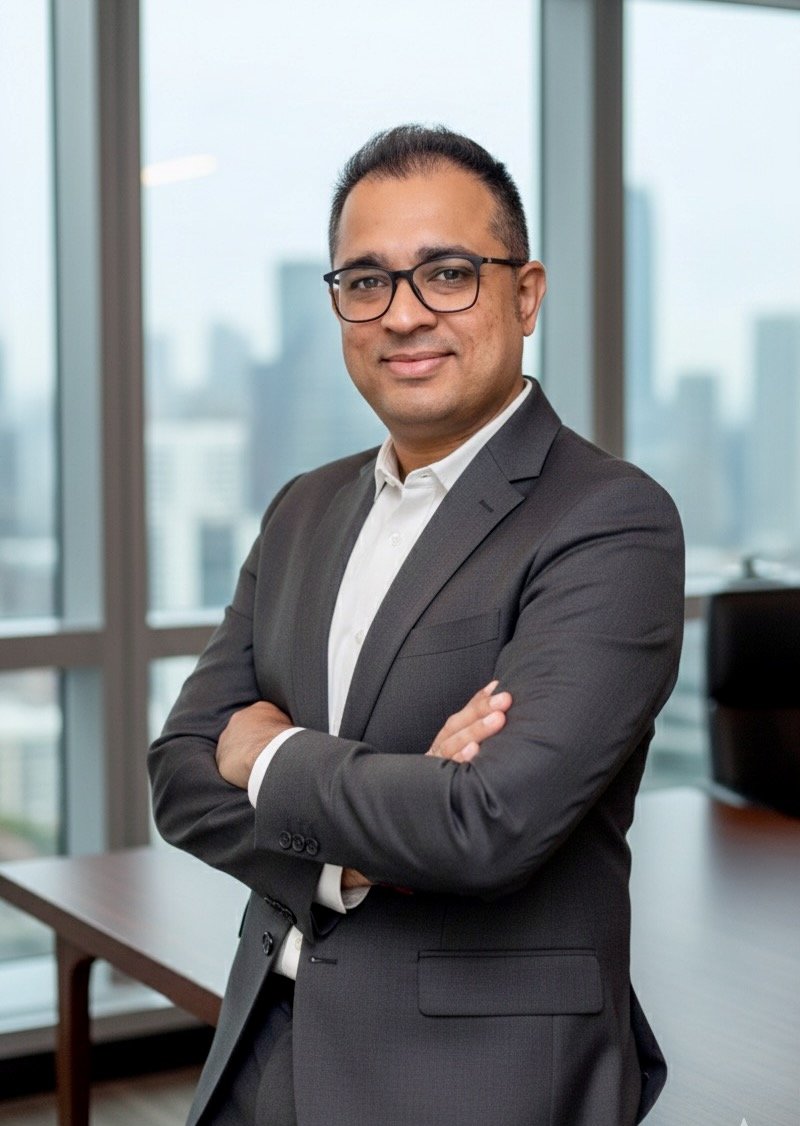
TechStartupHQ is owned by Dr. Rahul Dev under the global corporate structure of Hashchain Consulting Group USA. The platform connects startup, investor, technology and ecosystem research with practical pathways for customer acquisition, partnerships, fundraising and international expansion.
Continue to Day 2Compare the technology-frontier signals from Day 1 with the enterprise-readiness focus of Day 2, or map the leaders behind the programme.